
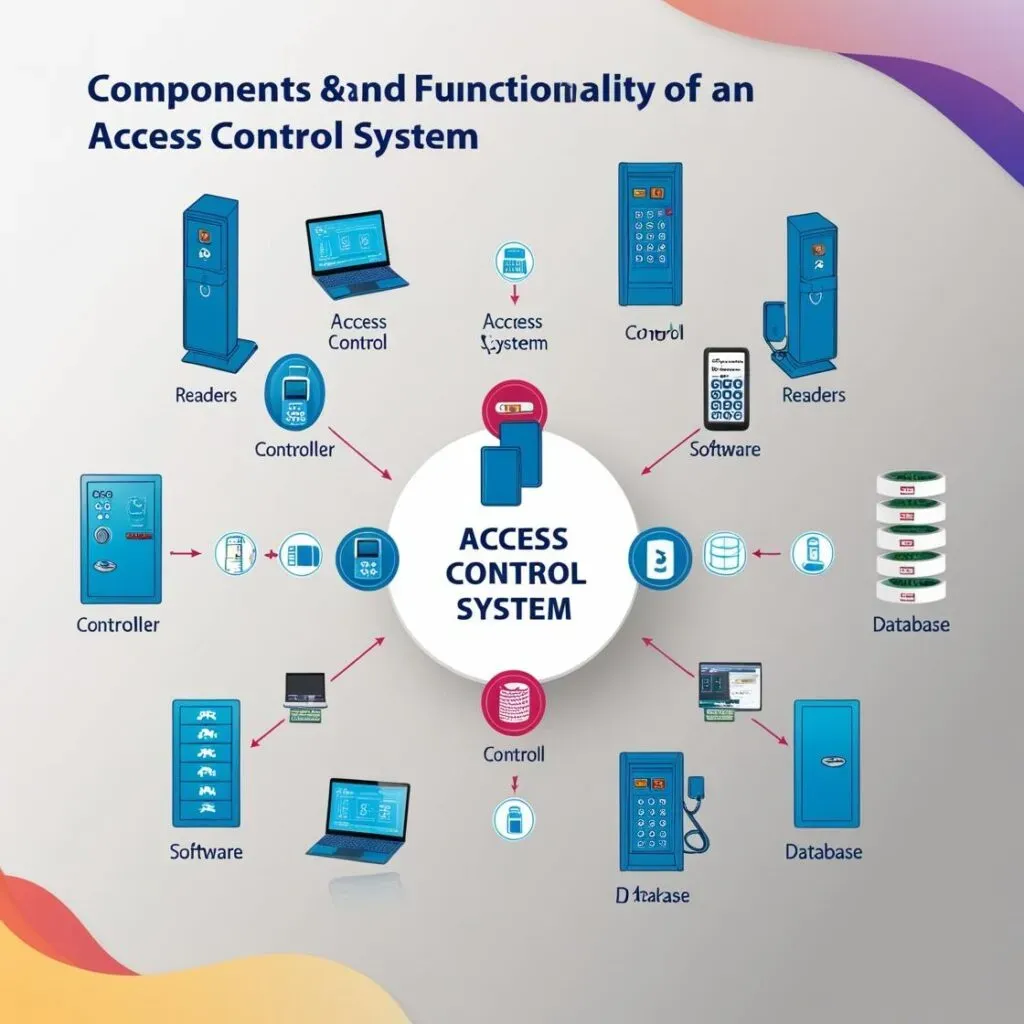
Access Control Systems sit at the heart of today’s security landscape, guiding who may enter and when. When paired with Integrated security solutions, they form a cohesive defense that protects people, assets, and information. Biometric authentication adds a robust layer of verification at entry points, reducing credential sharing and increasing trust. With scalable architecture and policy controls, they adapt to evolving security needs. Together, these capabilities support Smart building security, creating safer, more efficient environments for occupants.
Viewed through the lens of Latent Semantic Indexing, these tools resemble entry-management platforms that control doors, credentials, and permissions. From an LSI perspective, they align with credentialing technologies, identity governance, and policy-driven access across both facilities and networks. These solutions support seamless identity verification across physical spaces and digital services, strengthening risk-based access controls. They also complement broader security programs by delivering auditable logs, interoperable interfaces, and scalable governance. Framed as an identity-aware approach to security, they help facilities improve safety, efficiency, and regulatory compliance.
Access Control Systems and Integrated Security Solutions: A Unified Defense
In the modern security landscape, Access Control Systems are most effective when embedded within Integrated Security Solutions. This approach creates a cohesive defense that layers physical access controls with identity governance, IT security, and operational processes to protect people, assets, and data. By coordinating credentials, readers, controllers, and policy engines with video, alarms, and digital risk controls, organizations achieve stronger incident response, richer situational awareness, and streamlined administration.
A unified defense also helps optimize resources and reduce total cost of ownership. With integrated analytics, facility managers gain actionable insights from access logs, occupancy data, and security events, enabling smarter risk management. The result is a scalable, auditable security posture that adapts as the organization grows and as regulatory expectations evolve.
Biometric Authentication: Elevating Access Control Security
Biometric authentication adds a robust layer of verification that goes beyond traditional badges. Fingerprint, facial recognition, iris, and vein readers help prevent credential sharing and strengthen access to sensitive areas. When paired with mobile credentials and policy-driven IAM, biometrics offer a frictionless yet highly secure user experience.
Implementing biometric solutions requires thoughtful privacy and compliance planning. Data minimization, encryption in transit and at rest, and clear retention policies protect personal information while enabling rigorous access control. Integrating biometric authenticators with identity governance ensures timely provisioning, revocation, and auditing across both physical and digital environments.
Video Surveillance Integration: Linking Access Events with Footage
Video surveillance integration (VMS) enables access events to be correlated with recorded footage, providing richer evidence trails for investigations and faster response times. When door activity, credential use, and camera feeds are synchronized, security teams gain deeper context about incidents and can validate decisions with visual confirmation.
Integrating VMS with access control enhances operational efficiency and compliance. Real-time alerts tied to visual data support immediate containment, while post-event analytics improve policy tuning and risk scoring. This cross-domain visibility is a cornerstone of effective Integrated Security Solutions and smarter risk management.
Scalable Access Management for Growing Enterprises
Scalable access management prepares organizations for multi-site expansion, hybrid work models, and evolving security requirements. Cloud-enabled management, modular hardware, and centralized policy engines simplify onboarding, offboarding, and site-specific rule sets. RBAC and ABAC frameworks enable fine-grained permissions that adapt as teams, roles, and facilities change.
A scalable approach also emphasizes interoperability and future-proofing. Open standards, API-driven integrations, and vendor roadmaps support seamless upgrades and cross-system collaboration with IAM, video, and building automation. By prioritizing scalability early, organizations reduce disruption during growth and maintain consistent governance across all locations.
Smart Building Security: Aligning Access Control with Building Automation
Smart building security ties physical access to occupancy management, lighting, HVAC, and energy optimization. Access data informs space utilization and helps automate environmental controls, delivering a safer, more efficient environment for occupants. This holistic view—where access control feeds the building’s automation layer—enhances user experience and operational performance.
Integrating access with building systems supports proactive safety measures and cost savings. Real-time occupancy insights enable dynamic zoning, smarter alarm responses, and energy-aware cooling or heating strategies. A unified approach under Smart Building Security reduces risk while delivering a seamless experience for employees, visitors, and facilities teams.
Privacy, Compliance, and Governance in Modern Access Control
Privacy and governance are foundational to credible access control programs. Emphasizing data minimization, encryption, and clear retention policies helps balance security with user rights and regulatory obligations. Regular audits and transparent communications about data use build trust and support compliant operations within Integrated Security Solutions.
Strong governance also requires disciplined policy management, ongoing training, and third-party risk oversight. By documenting access rules, monitoring for drift, and maintaining auditable trails, organizations can demonstrate compliance and readiness for audits. Integrating privacy-by-design principles with IAM, cyber hygiene, and secure APIs ensures resilient security that respects user privacy while delivering robust access control.
Frequently Asked Questions
How can Access Control Systems enhance security when used with Integrated Security Solutions and video surveillance integration?
Access Control Systems, when paired with Integrated Security Solutions, unify physical access with video, alarms, identity management, and cybersecurity controls. This convergence enables centralized policy enforcement, richer audit trails, and faster, more accurate incident response across sites.
What is the role of Biometric authentication in Access Control Systems for high-security zones?
Biometric authentication in Access Control Systems provides robust verification beyond badges—such as fingerprint, facial, or iris methods—reducing credential sharing and supporting least-privilege access for high-security zones. When deploying biometrics, address privacy, data protection, and regulatory considerations.
How does Video surveillance integration complement Access Control Systems for faster incident response?
Video surveillance integration with Access Control Systems allows correlating access events with camera footage to verify incidents, support investigations, and speed response. This creates stronger evidence trails and better situational awareness for security teams.
What does Scalable access management mean for growing organizations deploying Access Control Systems?
Scalable access management means cloud-enabled management and modular hardware that grow with an organization. It enables centralized policy governance, rapid user provisioning, and multi-site administration, reducing migration costs as sites and needs expand.
How do Smart building security concepts interact with Access Control Systems to optimize occupancy and safety?
Smart building security concepts interact with Access Control Systems by feeding occupancy data into building automation—lighting, HVAC, and space management—to improve safety and operational efficiency while maintaining security.
What privacy and governance best practices should guide Access Control Systems deployments in smart building security environments?
In smart building security environments, privacy and governance best practices for Access Control Systems include data minimization, encryption in transit and at rest, regular audits, and transparent user communications to balance security with user privacy and regulatory compliance.
| Section | Key Points |
|---|---|
| Definition & Purpose | Determine who can enter or move within a building or area; combine credentials, policies, hardware, and software to enforce access; provide a scalable, auditable security layer that supports growth and risk management. |
| Integrated Security Solutions | Harmonizes physical security, IT security, and operations; integrates with video surveillance, alarms, IAM, and cybersecurity controls to create a unified security ecosystem; improves incident response, governance, and user experience; can reduce total cost of ownership. |
| Core Components | Credentials & readers; Controllers & door hardware; Management software; Identity governance & provisioning; Monitoring & analytics. |
| Key Technologies | Biometric authentication; Mobile/virtual credentials; Cloud-based management; Edge computing and offline credentials; RBAC and ABAC; Privacy-by-design considerations. |
| Implementation Considerations | Risk assessment and site surveys; Interoperability and standards; Scalability and future-proofing; Policy governance; Vendor evaluation (security certifications, TCO); Privacy and data protection; User experience and adoption. |
| Industry Applications | Offices and campuses; Healthcare; Manufacturing and logistics; Data centers and critical infrastructure; Education and government facilities. |
| Privacy, Compliance & Governance | Data minimization; Encryption in transit and at rest; Regular audits; Transparent user communications; Compliance with regulations and standards. |
| Future Trends & ROI | AI-driven anomaly detection; Mobile-first credentials; Deeper integration with zero-trust models; Cross-domain data correlation; Greater scalability, better user experience, and stronger compliance. |
| ROI & Best Practices | Reduced incidents and faster investigations; Lower badge management costs; Better occupancy management and energy efficiency when integrated with building systems; Clear, auditable records; Start with policy, interoperable tech, and ongoing training and testing. |
Summary
Access Control Systems are foundational to any robust security program. When combined with Integrated Security Solutions, they form a dynamic, data-informed defense that protects people, assets, and operations. By selecting the right components, embracing scalable technologies, and prioritizing privacy and governance, organizations can achieve secure, efficient access management that supports modern workflows and future growth. This integrated approach leads to safer premises, improved user experience, and a resilient security posture for employees, visitors, and partners alike.