
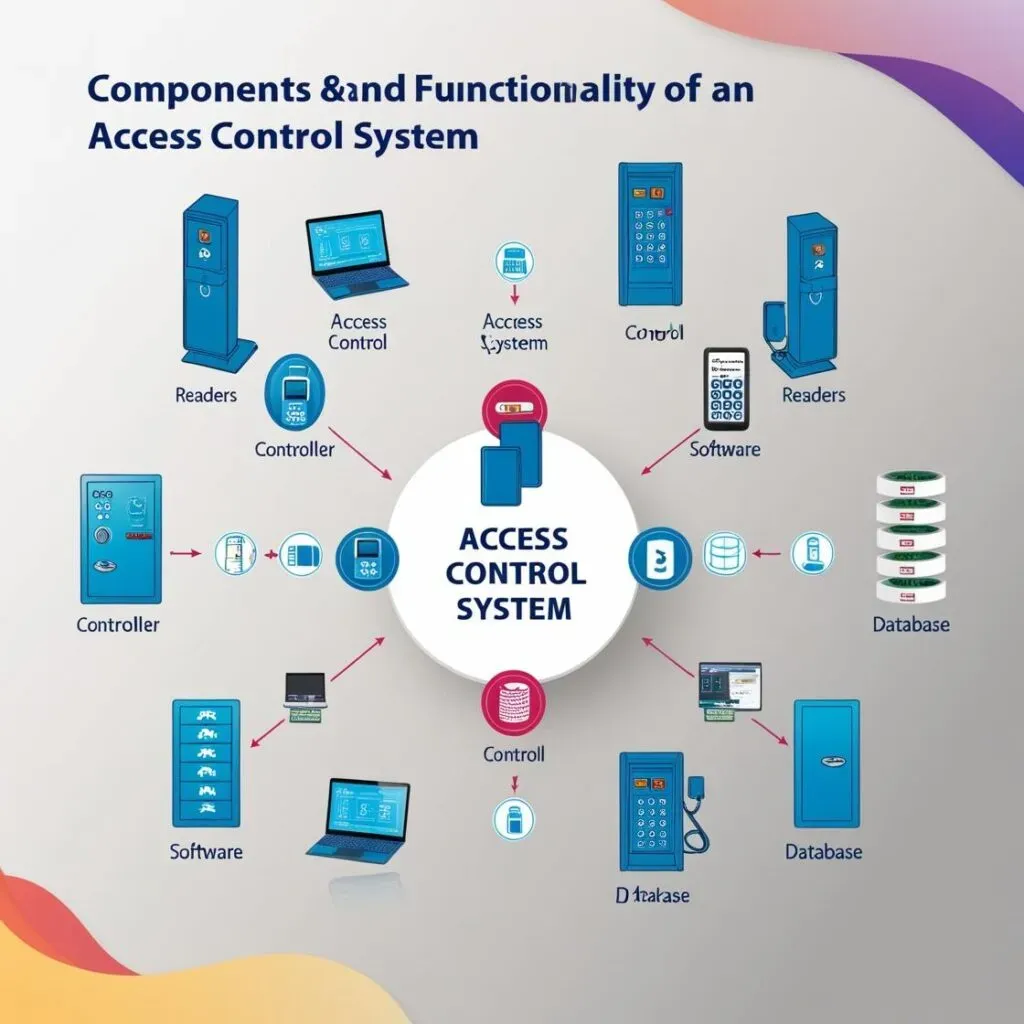
Access control systems are a cornerstone of modern business security, blending people, spaces, and policies into a coordinated protection strategy that scales with growing organizations. They go beyond locking doors, leveraging biometric access control and RFID door access to verify identities, manage entries, and support enterprise security across multiple sites for facilities, campuses, and data centers worldwide. Cloud-based access control platforms enable centralized policy management, real-time monitoring, and scalable visitor management to streamline operations and reduce administrative overhead and to support risk-based access decisions. Credentials such as mobile keys, access cards, and secure PINs underpin flexible, role-based access that adapts to changing work patterns and regulatory demands, to accommodate evolving roles and cross-functional teams. By delivering clear audit trails and granular control over who can enter where and when, these systems help protect people, property, and information while supporting efficient, compliant workflows, and by maintaining privacy, accessibility, and seamless user experiences.
Another way to frame the topic is through terms like physical access control, entry management, and premises security technologies, which describe the same core goal from a broader security perspective. These solutions combine sturdy hardware, smart software, and policy-driven workflows to govern who is allowed entry, when, and under what conditions, while generating auditable records for risk management and compliance. Emphasizing identity, credentials, and device-based authentication helps organizations connect access decisions to broader IT security, such as IAM and directory services, ensuring cohesive protection across campuses and facilities.
Access control systems: Architecture and components for modern security
Access control systems integrate hardware such as door readers, electronic locks, controllers, and door sensors with software policy engines to decide who can enter which spaces and when. Features like RFID door access readers and wireless components let buildings enforce entry points while minimizing wiring and maintenance.
With software-driven policies and real-time monitoring, these systems provide auditable trails that support incident response and regulatory requirements. Cloud-based access control options extend centralized management across sites, enabling stronger alignment with broader enterprise security and IT ecosystems while simplifying updates and policy enforcement.
Biometric options and RFID door access: Strengthening identity verification
Biometric access control uses unique physical characteristics—fingerprints, iris patterns, or facial recognition—to verify identity at entry points, reducing credential sharing and the risk of unauthorized access. When deployed thoughtfully, biometrics enhances security for sensitive zones without relying solely on cards or codes.
Pairing biometrics with RFID door access provides both strong verification and convenient entry. This combination supports streamlined user experiences while maintaining robust auditability, though it requires careful privacy protections, secure storage of biometric data, and clear consent in line with data protection practices.
Cloud-based access control: Centralized visibility across multiple sites
Cloud-based access control centralizes policy definitions, user provisioning, credential lifecycle, and software updates, enabling IT teams to manage security from a single dashboard. Centralized administration reduces on-site maintenance and accelerates deployment across new locations.
This model supports scalable, multi-site operations and strengthens cross-site compliance through consistent auditing, reporting, and real-time alerting. It integrates smoothly with enterprise security practices, IAM, and HR systems to maintain unified access governance.
Visitor management integration: Streamlined guest access and accountability
Integrated visitor management improves express check-in, temporary access provisioning, and post-visit audits. By linking visitor data to access control, facilities can enforce zone restrictions and escort policies while delivering a seamless experience for guests.
Coupled with physical access controls, visitor workflows provide end-to-end traceability from arrival to departure, supporting security investigations and regulatory requirements. The resulting audit trails enhance accountability and help security teams quickly identify access anomalies.
Enterprise security alignment: Integrating access control with IT and security operations
Access control intersects with enterprise security by aligning with IAM, directory services, and HR systems to enforce identity-based policies across facilities. This integration ensures consistent authentication, authorization, and visibility for physical spaces and digital assets.
This holistic approach improves risk management, accelerates incident response, and supports regulatory compliance. By correlating entry activity with IT events, security operations gain a unified view of threats and can respond with coordinated containment strategies.
Deployment models, scalability, and governance: Best practices for a resilient program
Deployment options include on-premises, cloud-based, or hybrid models; phased rollouts help manage risk, budget, and user adoption. A thoughtful deployment plan enables smooth transitions and reduces disruption to daily operations.
Establish governance through ongoing policy reviews, regular audits, privacy controls, and credential lifecycle management to prevent privilege creep and ensure data retention policies are followed. This disciplined approach sustains long-term security, operational efficiency, and compliance across the organization.
Frequently Asked Questions
How do access control systems support enterprise security and traceability?
Access control systems safeguard enterprise security by enabling entry only for authorized individuals and by recording who entered which spaces and when. They provide auditable trails that support investigations, regulatory compliance, and security operations. When paired with video surveillance and IT integration, these systems improve traceability and incident response; examples include RFID door access and mobile credentials for convenient, secure entry.
What is biometric access control within access control systems and what are its benefits?
Biometric access control uses unique physical traits—such as fingerprints, iris patterns, or facial recognition—to verify identity within access control systems. This approach strengthens security by reducing credential sharing and impersonation, especially for high-security zones. When paired with privacy protections and secure data handling, biometric solutions complement traditional cards or mobile credentials to balance security and user experience.
What are the advantages of cloud-based access control for multi-site enterprise security?
Cloud-based access control provides centralized management across multiple sites, enabling consistent policy enforcement, real-time monitoring, and rapid updates. It reduces on-site IT overhead and supports scalable growth, while improving cross-site visibility and incident response. Consider data sovereignty, resilience, and integration capabilities with IAM and HR systems when evaluating cloud options.
How does visitor management integrate with access control systems?
Visitor management integrates with access control systems to pre-register guests, issue temporary credentials, and track arrivals and departures. This streamlines express check-in, enhances security, and creates a complete audit trail for post-visit reviews. Tying visitor data to access policies helps maintain a secure perimeter without slowing down operations.
What is RFID door access and how does it fit into a modern access control system?
RFID door access uses radio frequency identification to grant entry via cards, fobs, or badges. It delivers fast, scalable, and contactless entry across many doors, improving efficiency and security. RFID door access can be layered with biometric authentication or mobile credentials to strengthen authentication and create richer audit trails.
What deployment considerations should a company review when selecting an access control system for enterprise security?
Consider the scope and scale (sites, doors, zones), integration with existing security and IT ecosystems, and the deployment model (cloud-based, on-premises, or hybrid). Evaluate credential strategies (biometric, RFID, or mobile), privacy and data retention requirements, user experience, and total cost of ownership. Plan for future growth, multi-site expansion, and evolving policy needs to protect enterprise security.
| Topic | Key Points |
|---|---|
| What are access control systems? | A combination of hardware, software, and policies that manage physical entry to facilities and rooms. They decide who can enter, when access is granted, and where access is permitted. Modern systems provide real-time monitoring, detailed audit trails, and integration with broader security and IT ecosystems. |
| Key components | Hardware: door readers, electronic locks, controllers, and sensors. Credentials: keycards, mobile credentials, PINs, or biometrics. Software: management platform (including cloud options). Policies/workflows: time-based rules, zone restrictions, and conditional access. |
| Why they matter for security and traceability | Prevent unauthorized access and create auditable records of who went where and when. This traceability supports investigations, regulatory compliance, and broader security operations; audit trails help correlate incidents with people and spaces. |
| Benefits | Enhanced security by restricting entry to authorized individuals; improved incident response with real-time alerts; better visitor management; detailed logs for compliance; operational efficiency and reduced administrative overhead; scalability for multi-site deployments. |
| Choosing the right system | Assess scope and scale (sites, doors, zones); plan credential strategy (cards, mobile, biometrics); ensure integration with existing security and IT systems; choose deployment model (on-premises, cloud, or hybrid); consider privacy/compliance and total cost of ownership; emphasize user experience. |
| Implementation best practices | Start with a needs assessment; map roles to access rights; develop phased deployment; ensure onboarding/offboarding aligns with HR; integrate with IAM/IT security; plan for privacy and data protection; test, train, and establish ongoing governance. |
| Real-world use cases | Corporate offices; Healthcare facilities; Education campuses; Manufacturing and logistics; Retail and hospitality. |
| Common myths and smart practices | Myths debunked: not all systems are the same; biometrics are not inherently intrusive; a single system is not always enough. Realities: configurations and integrations vary, privacy protections matter, and layered approaches are best. Best practices include incident-response readiness and strict credential lifecycle management. |
Summary
Access control systems are a strategic cornerstone of modern security, efficiency, and accountability. They combine hardware, software, and policies to manage who can enter which spaces, when they can enter, and under what conditions, delivering traceability across facilities. By selecting the right mix of components and deployment models—whether on-premises, cloud-based, or hybrid—organizations can improve protection, visibility, and daily operations. A well-designed solution scales with growth, integrates with IT and security ecosystems, and provides a smoother experience for staff and visitors. In short, robust access control systems empower safer, more transparent, and efficient business operations.