
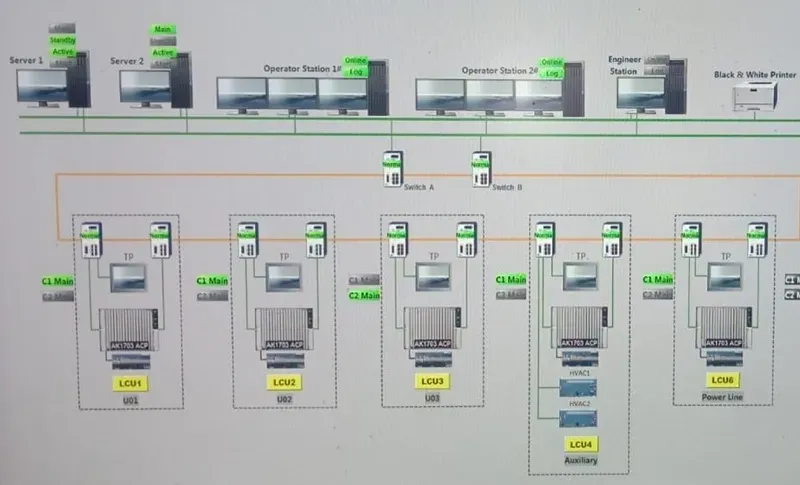
Redundant design in access control systems is not a luxury; it is a core requirement for modern facilities that must maintain security and safety even during disruptions. From doors and readers to software authentication and power supplies, redundancy keeps authorized access flowing when components fail. This approach supports high availability access control, ensures fault tolerance in access control, and minimizes the risk of outages during emergencies. By designing for redundancy, organizations align with best practices for backup power for access control systems and security system redundancy, reducing the chance of single points of failure. Ultimately, redundancy improves user experience, speeds up incident response, and preserves audit trails even when disruptions occur.
Exploring redundancy through the lens of resilience, availability, and continuity helps teams communicate the concept beyond a single phrase. Alternative terms like system reliability, continuous operation, and failover-enabled architecture convey the same core idea as redundancy in access control. By mapping related concepts such as rapid recovery, data synchronization, and fault-tolerant design, organizations align content with search intent and improve discoverability. The goal is a descriptive, web-friendly framing that supports users seeking durable access control solutions.
1) Redundant design in access control systems: Foundations for resilient security
Redundant design in access control systems is a foundational requirement for modern facilities that must preserve security and safety through disruptions. In today’s digital and physical security landscape, the ability to authenticate, grant or deny access, and log events without interruption is critical. Embracing access control system redundancy helps organizations avoid single points of failure and maintain continuous operation even during outages.
This principle extends beyond door hardware to include the software that authenticates users, the network paths that connect components, and the power supplies that keep devices operational. When a component fails, a redundant path or spare device keeps doors from locking out legitimate users and prevents security gaps, preserving the user experience and safeguarding sensitive areas.
2) Architectural patterns for fault tolerance in access control
Architectural patterns for fault tolerance in access control are designed to keep critical functions online under failure conditions. Key techniques include graceful degradation of nonessential features and automated failover for controllers, readers, and credential databases. These patterns reduce downtime and maintain core security operations during faults.
Robust health monitoring, versioned software rollbacks, and tamper-evident logging help ensure a secure transition when faults occur. The result is predictable behavior, minimal manual intervention, and a quick return to normal operations without compromising the integrity of access decisions or audit trails.
3) Achieving high availability access control through resilient architectures
Achieving high availability access control requires disciplined design choices such as N plus 1 redundancy, hot standby devices, and automated failover. By distributing controllers, readers, and services across multiple paths and sites, organizations can sustain access functions even when individual components fail.
Operational readiness is measured by metrics like MTBF, MTTR, RPO, and RTO, complemented by real-time dashboards and incident response playbooks. Regular automated failover tests and staff drills ensure that recovery times remain predictable and security posture is preserved during disruptions.
4) Backup power for access control systems: maintaining control during outages
Backup power for access control systems is essential to continuity during outages. Uninterruptible power supplies (UPS) sized to the expected occupancy and risk profile keep readers and controllers online through short outages, ensuring doors remain correctly controlled and events are logged.
Design should also include automatic transfer switches, generator integration, and power-path diversity to prevent a single outage from cascading into a security breach. A holistic approach considers battery health, cooling needs for critical devices, and coordinated power handover to sustain operations during extended disruptions.
5) Network and data redundancy in access control ecosystems
Network and data redundancy protect the integrity of access control ecosystems. Deploying dual network paths, diverse cabling routes, and separate VLANs helps isolate security traffic and maintain performance during faults, supporting continuous authentication and access decisions.
Data redundancy is equally important; replicate credential databases and audit logs to a secondary location with timely synchronization. Central identity services such as LDAP or Active Directory should be replicated to support authentication across sites, reinforcing a resilient security posture even if one site experiences a fault.
6) Operational readiness and security implications of redundancy in access control
Operational practices ensure redundancy remains effective through disciplined lifecycle management. Regular testing of failover paths, coordinated upgrades across redundant components, and firmware compatibility checks are essential to sustaining access control system redundancy and maintaining strong security.
Drills for emergency closures, clear incident response playbooks, and comprehensive documentation—architecture diagrams, failover steps, and contact procedures—are invaluable during incidents and audits. This rigorous operational discipline strengthens security system redundancy and supports rapid, consistent responses to disruptions.
Frequently Asked Questions
Why is Redundant design in access control systems essential for modern facilities?
Redundant design in access control systems is not a luxury; it’s a core requirement to maintain security and safety when disruptions occur. It covers hardware, software, networks, and power so authentication, access decisions, and event logging continue with minimal impact. Patterns such as N+1 and hot standby support automatic failover and predictable recovery.
How does access control system redundancy improve fault tolerance in access control?
Access control system redundancy directly boosts fault tolerance in access control by providing alternate components and paths that can take over instantly. Automated failover, continuous health monitoring, and tamper-evident audit trails ensure operations stay secure and auditable during faults. This reduces downtime and preserves security posture.
What architectural patterns support high availability access control and redundancy?
Architectural patterns for high availability access control and redundancy include N+1 for controllers and readers, hot standby strategies, redundant power and UPS, and dual network paths with data replication. Together these patterns minimize single points of failure and support seamless operation during maintenance or faults. They also support real-time event correlation and audit consistency.
How does backup power for access control systems contribute to security system redundancy during outages?
Backup power for access control systems is a core pillar of resilience. Sized UPS provide runtime during outages, with automatic transfer switches to generators for longer disruptions, keeping doors controlled and logs active. Proper sizing, battery health monitoring, and coordinated power paths preserve security during power events.
What practices ensure network and data redundancy in access control systems to maintain availability and security system redundancy?
Practices to ensure network and data redundancy in access control systems include dual switches, diverse cabling routes, separate VLANs for security traffic, and real-time credential database replication. Regular sync of audit logs and centralized identity services helps maintain consistent authentication across paths even during faults. Clock synchronization and tamper-evident logging remain intact through failover.
What are key considerations for fault tolerance in access control and resilience engineering?
Key considerations for fault tolerance in access control and resilience engineering include graceful degradation, fast recovery, continuous health monitoring, versioned software rollbacks, and redirection of authentication traffic to healthy services. Preserve tamper evidence, immutable logs, and automated failover, with regular testing and incident playbooks.
| Key Point | Explanation |
|---|---|
| Purpose of redundancy | Removes or minimizes single points of failure in hardware, software, networks, and power that support access control. |
| Scope of redundancy | Covers doors, readers, authentication software, network paths, and power supplies to keep devices operational. |
| Core goal | Maintain authentication, access decisions, and event logging without interruption during disruptions. |
| N+1 redundancy | Having at least one spare controller and reader in the same topology to take over automatically. |
| Hot standby and automated failover | Fully functional backups that immediately assume operation, with automated testing and monitoring. |
| Redundant power and UPS | Redundant power supplies and UPS with enough runtime; consider generators for longer outages. |
| Network and data redundancy | Dual network paths, diverse routes, VLANs, and replicated credential databases and logs. |
| Security and redundancy integration | Failover preserves audit trails, tamper detection, and clock synchronization. |
| Fault tolerance and resilience engineering | Graceful degradation, fast recovery, health monitoring, and immutable logs to protect against tampering. |
| High availability design and operational readiness | Automated failover, redundant servers, real-time dashboards, incident playbooks, and routine drills. |
| Backup power as a resilience pillar | Sizing UPS, generator integration, battery management, and environment considerations to support critical devices. |
| Operational practices | Regular testing, change management, coordinated upgrades, drills, and comprehensive documentation. |
| Case examples | Campus and data center scenarios illustrate real-world resilience and effective deployment of redundancy patterns. |
Summary
Redundant design in access control systems is a pragmatic approach to ensuring continuous security and operational continuity, even in the face of disruptions. By employing patterns such as N+1 and hot standby, along with robust power, network, and data redundancy, organizations can preserve authentication, access decisions, and event logging without interruption. These practices help avoid single points of failure, support safe evacuations, and maintain regulatory compliance across doors, turnstiles, and credential verification points. Effective fault tolerance, proactive monitoring, and regular testing translate resilience into measurable uptime and safer facilities. As technology evolves, ongoing evaluation and optimization keep access control systems resilient against evolving threats and changing operational requirements.