
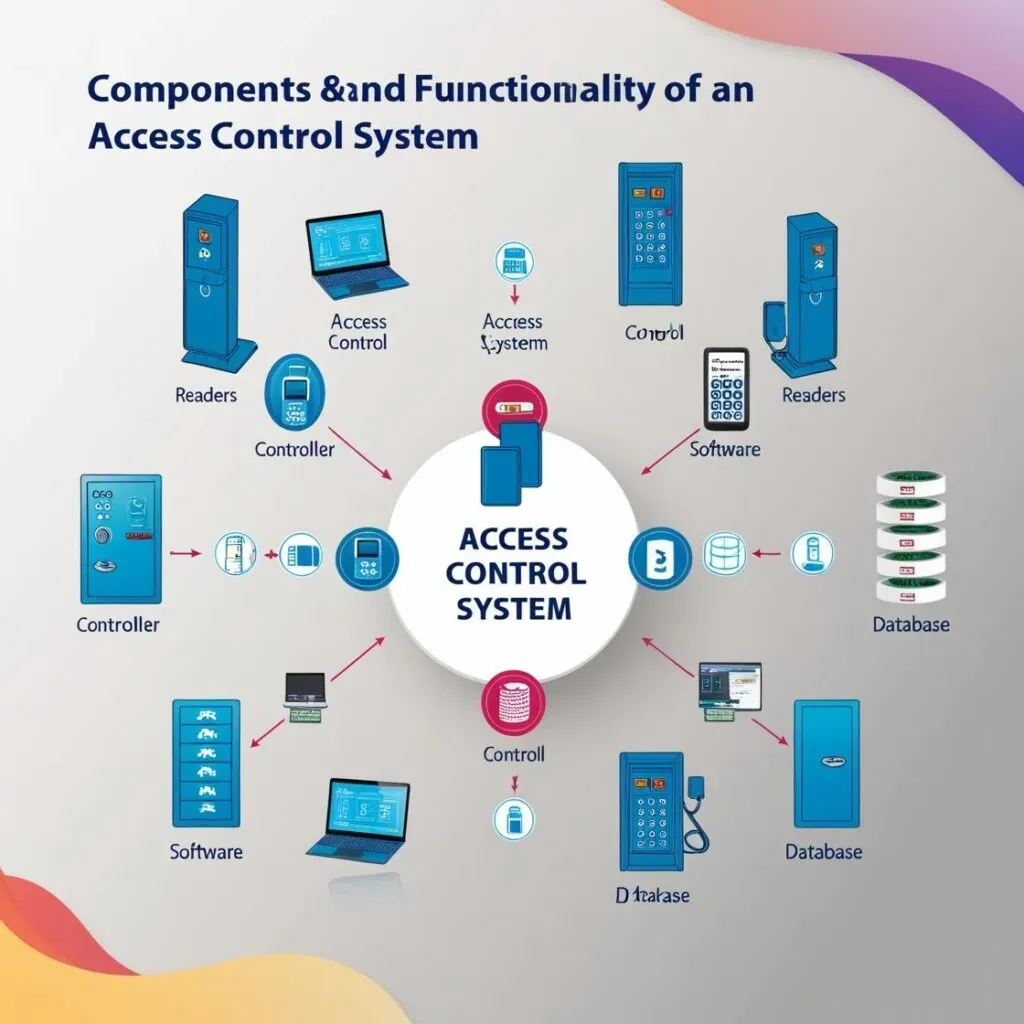
Access Control Systems set the guardrails for who can enter which spaces, when, and under what conditions across modern buildings, campuses, data centers, and restricted workplaces. In this access control systems guide, you’ll learn how to select, deploy, and manage these solutions to protect people and assets while keeping operations smooth. From card-based access control to biometric access control and mobile credentials, there are practical types of access control systems to consider. We outline best practices for access control to balance security with user experience, cost, and maintenance. Whether you manage a single facility or a multi-site portfolio, the right setup helps you scale, stay compliant, and adapt to changing security needs.
Beyond traditional locks, physical access management uses credential verification, reader hardware, and policy-driven rules to control entry points. Thinking in terms of identity and authorization, this topic becomes about credential management, door controllers, and centralized governance that determines who gets through and when. This LSI-friendly framing ties to concepts like RBAC, IAM, and risk-based access, and it supports integration with surveillance, alarms, and IT platforms. Whether you call it entry control, access governance, or door security, the goal remains the same: a scalable, user-friendly system that protects people and property.
1) Understanding Access Control Systems: A Comprehensive Guide
This section aligns with the access control systems guide, offering a clear overview of what access control systems are, why they matter, and the roles they play across buildings, campuses, data centers, and restricted workplaces. By defining credentials, readers, controllers, and software, it explains how modern systems replace traditional lock-and-key approaches with digital access management that can scale with an organization’s evolving security needs.
A holistic look at the landscape shows that effective access control systems combine policy design, credential management, and auditable event logs. This guide emphasizes how these elements translate into real-world protections for people and assets while enabling smoother daily operations. It also highlights the balance between security, convenience, and cost, and how integration with video, alarms, and HR or IT systems can create a cohesive security fabric.
2) Card-Based Access Control: Reliability, Benefits, and Deployment Strategies
Card-based access control uses physical cards or smart cards issued to authorized users, offering a familiar and reliable starting point for many organizations. This approach provides straightforward enrollment, durable hardware, and predictable performance for entry points, with readers that capture credentials and relay decisions to central controllers.
Deployment considerations for card-based systems include managing card lifecycles, revocation, and integration with offline-environment capabilities. While cards remain popular for baseline access, many organizations layer mobile or digital credentials and/or biometrics to strengthen security in sensitive zones, ensuring a scalable path from simple implementations to more advanced configurations.
3) Biometric Access Control: Balancing Security, Privacy, and Usability
Biometric access control leverages unique traits such as fingerprints, facial features, or hand geometry to verify identity. This method can significantly reduce credential sharing and improve security in high-risk areas, supporting rapid, phishing-resistant authentication in a way that traditional cards alone cannot.
Implementing biometric systems requires careful attention to privacy, data protection, and user acceptance. Organizations should define strict data governance, use secure storage and transit for biometric templates, and ensure consent and accessibility considerations are addressed, so biometrics enhance security without compromising trust or usability.
4) Mobile and Digital Credentials: The Future of Access Control
Mobile and digital credentials enable doors to be unlocked by smartphones or wearables using secure digital tokens. This approach improves user convenience, reduces the administrative overhead of issuing and managing physical cards, and supports scalable, contactless access across multiple facilities.
As organizations adopt mobile credentials, they should consider device management, remote wipe capabilities, and secure provisioning. This direction also aligns with the growing emphasis on types of access control systems that blend convenience with strong security controls, ensuring that enrollment, revocation, and policy updates stay synchronized across devices and readers.
5) Cloud-Based vs On-Premises: Choosing the Right Deployment Model for Access Control Systems
Cloud-based deployment centralizes management, simplifies software updates, and often enables rapid scalability across campuses or portfolios. It can reduce on-site maintenance and improve visibility into access events through centralized dashboards and analytics.
On-premises solutions offer greater control, potentially lower ongoing connectivity requirements, and predictable performance for mission-critical environments. Many organizations choose hybrid models that blend cloud capabilities with local control to balance resilience, regulatory considerations, and integration with existing CCTV, HR systems, and building management platforms.
6) Best Practices for Access Control: From Policy Design to Auditing
Best practices for access control begin with a policy-first approach: define roles, locations, and time-based access, then map credentials accordingly to uphold the principle of least privilege. This alignment ensures that security measures match the organization’s actual risk profile and operational needs.
To sustain security over time, organizations should implement credential lifecycle management, multi-factor authentication where appropriate, and regular audits. The guidance also covers data privacy, incident response readiness, and continuous improvement through testing of egress routes, policy reviews, and integration with other security layers such as video surveillance and alarms.
Frequently Asked Questions
What are the core components of Access Control Systems and how do they work?
Access Control Systems are built from credentials, readers, controllers, door hardware, access control software, and a network layer. They verify identities, enforce policies, log entry events, and support both offline operation for reliability and cloud-connected management for scalability.
How do biometric access control and card-based access control compare within Access Control Systems?
Biometric access control uses unique traits (fingerprint, facial recognition, etc.) to verify identity, reducing credential sharing, while card-based access control relies on physical cards or fobs. Many systems combine both in a single Access Control Systems platform, enabling multi-factor authentication for higher-security zones.
What are best practices for access control when designing a scalable Access Control System?
These are best practices for access control: start with a policy-first approach and define roles, locations, and time-based access using the principle of least privilege. Use phased deployments, MFA, and support for mobile credentials; plan for regular audits, privacy protections, and scalable cloud or hybrid management.
What deployment models exist for access control systems, including cloud-based and on-premises options?
Deployment options include on-premises, cloud-based, and hybrid architectures. Cloud-based solutions simplify updates and multi-site management, while on-premises offers control and low dependency on the network. Evaluate based on your facility size and the types of access control systems you plan to deploy.
How can you implement MFA and mobile credentials in biometric access control or card-based access control setups?
Implement multi-factor authentication by combining a credential (card or mobile credential) with a second factor such as biometrics or a mobile push confirmation. Mobile credentials offer convenience and, with proper device management, can securely replace or augment card-based access within your Access Control Systems.
What should you consider in a guide for selecting and deploying access control systems?
Consider facility layout, user population, security goals, privacy and compliance, integration needs (video, alarms, HR systems), budget, and maintenance. This aligns with an access control systems guide and helps tailor a scalable, compliant solution.
| Section | Key Points |
|---|---|
| What are Access Control Systems? | Technology-enabled mechanisms that verify credentials, grant authorization, and log entry events for doors and entry points; replace traditional lock-and-key with digital credentials, readers, and centralized software; provide visibility into activity, support incident response, and simplify audits. |
| Why a guide matters | Helps tailor the solution to facility layout, user population, and risk profile; balances security, convenience, and cost; ensures integration with video surveillance, alarms, HR enrollment data, and building management platforms; reduces gaps and maintenance overhead. |
| Key Components |
|
| Types of Access Control Systems |
|
| Choosing criteria |
|
| Best practices |
|
| Deployment considerations |
|
| Industry standards, compliance, and privacy |
|
| Maintenance, upgrades, and the path forward |
|
| Holistic security posture |
Access Control Systems are most effective when integrated with surveillance, perimeter protection, visitor management, and awareness programs to form a cohesive security fabric. |
Summary
Access Control Systems form the backbone of physical security, enabling controlled access, visibility, and governance across facilities. They combine credentials, readers, controllers, door hardware, software, and an integrated network to enforce who may enter, where, and when. By applying a policy-first approach, phased deployment, MFA, and regular audits, organizations can achieve scalable security, improved user experience, and ongoing resilience. The guide also highlights the importance of privacy, compliance, and interoperability to ensure long-term effectiveness and alignment with evolving security needs.