
Access Control Systems are the security backbone of modern facilities, ensuring that only authorized individuals can enter specific areas at designated times. They go beyond simple locks by providing programmable rules, audit trails, and scalable security that can adapt to a growing organization. This guide introduces what these systems are, why they matter, and how their core concepts and components work together to protect people, assets, and information. Whether you’re outfitting a small office or a large campus, understanding these systems helps you design a secure, efficient access strategy. From biometric authentication to smart-card access, these tools offer flexible ways to manage entry.
In other terms, these solutions function as credential-based entry-management platforms that regulate who can enter which spaces and when. They rely on models such as RBAC and ABAC to assign permissions according to roles, attributes, and context. The system orchestrates readers, controllers, and software to turn identity into an authorization decision, while logs capture actions for audit. Beyond door hardware, these ecosystems often integrate with identity and access management (IAM) tools and video surveillance to support unified security workflows. Understanding the types of access control systems can help you choose between on-premises, cloud-based, or hybrid deployments. At a practical level, focus on core components such as credentials, readers, controllers, policy engines, and reporting to design a scalable, privacy-conscious solution.
What Are Access Control Systems and Why They Matter
Access Control Systems are the security backbone that governs who can enter spaces and when. They combine hardware readers, software policies, and a management layer to enforce permissions beyond what traditional locks offer. By tying identity verification to door access decisions, they help reduce risk, support audits, and adapt to changing facilities.
In practice, these systems span small offices to large campuses, integrating with HR databases, IAM platforms, and video surveillance. The result is a flexible, scalable security posture that can enforce time-based rules, emergency lockdowns, and visitor management while delivering actionable data for risk assessment.
Types of Access Control Systems: RBAC, ABAC, DAC, and MAC
Types of access control systems vary in how they decide who can enter. Role-based access control (RBAC) assigns permissions by job function, simplifying administration in larger organizations.
Attribute-based access control (ABAC) bases decisions on user attributes and environmental factors, enabling context-aware access. Discretionary access control (DAC) and mandatory access control (MAC) offer flexibility and tighter control for sensitive zones; many sites blend approaches to balance ease of use with security rigor.
Key Components of Access Control Systems and How They Interact
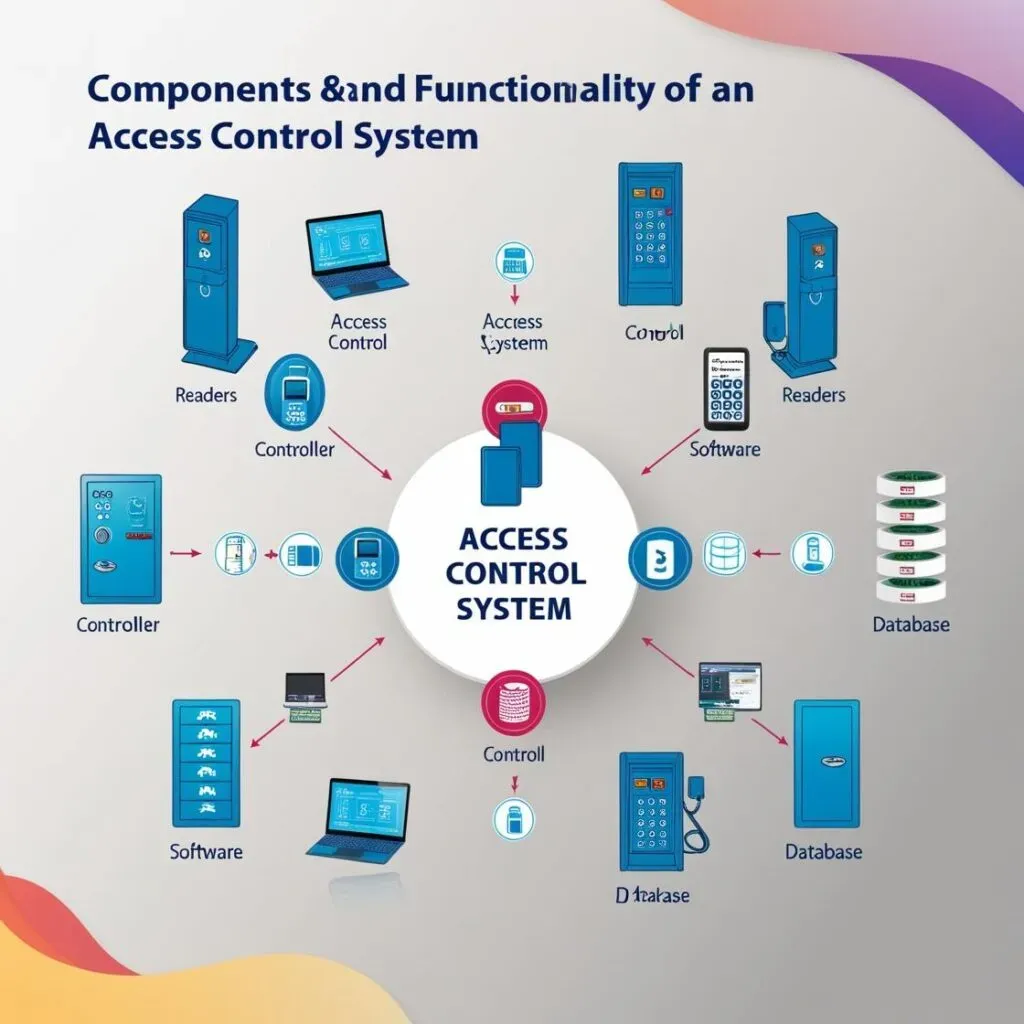
The core components of access control systems include readers, controllers, locks, and the software that binds them together. Readers scan credentials, controllers interpret them, and electric strikes or maglocks respond to approved commands.
Network infrastructure, power, and redundancy ensure reliability, while the management software stores identities, permissions, schedules, and audit logs. Video integration and alarm systems tie events to real-time monitoring for rapid response.
Biometric Authentication in Access Control: Benefits and Considerations
Biometric authentication adds a strong layer of assurance by verifying unique physiological traits such as fingerprints or facial features. When paired with a possession factor, biometrics enhance security without sacrificing throughput.
However, biometric data raises privacy and data-protection concerns. Systems should use secure templates, challenger-based enrollment, and clear retention policies, along with options for fallback credentials.
Smart-Card Access and Mobile Credentials: The Pulse of Modern Door Access
Smart-card access and mobile credentials are foundational to modern door access control, delivering contactless, fast authentication through RFID, NFC, or Bluetooth.
Managing these credentials requires careful key management, revocation processes, and lifecycle control to prevent misuse, especially in environments with many visitors or contractors. Mobile credentials can improve user experience while maintaining security through platform-level protections and regular audits.
Designing a Scalable, Compliant Access Control Strategy for Modern Facilities
Designing a scalable, compliant access control strategy means selecting modular hardware, cloud- or on-premises software, and policy frameworks that evolve with the organization.
Consider integration with HR, IAM, video, and incident response workflows, plus privacy compliance and regular maintenance. A robust solution supports door access control across sites, offers offline resilience, and provides clear audit trails for governance and audits.
Frequently Asked Questions
What are the main types of access control systems and when should each be used?
The main types of access control systems are RBAC (role-based), ABAC (attribute-based), DAC (discretionary), and MAC (mandatory). RBAC assigns permissions by role, ABAC uses user attributes and context, DAC lets owners grant access, and MAC enforces centralized security labels. Many organizations blend these approaches to balance simplicity, granularity, and compliance.
What are the components of access control systems and how do they enable policy enforcement?
Key components include readers/credential scanners, controllers and door hardware, access control panels, locks, power supplies, network connectivity, software databases, and optional video integration and alarms. Together, these components enforce policies, log entry events, and enable scalable management across sites.
How does biometric authentication improve security within access control systems?
Biometric authentication verifies unique physical traits (like fingerprints or facial recognition) and is often used with multi-factor authentication to strengthen security. It reduces credential sharing and supports stronger access decisions, while requiring privacy protections and careful management of false acceptance/rejection rates.
What is smart-card access and how does it integrate with door access control systems?
Smart-card access uses proximity or smart cards, often with mobile credentials, to provide convenient door access control. Cards or phones communicate via RFID/NFC to readers, which, in coordination with controllers, authorize entry. This minimizes touchpoints and supports rapid throughput, with proper card lifecycle management.
Why is door access control essential for secure facilities?
Door access control is essential because it restricts who can enter specific areas, when they can enter, and tracks events for audits. It supports incident response, occupancy management, and integration with alarms and video for a cohesive security posture.
How do organizations choose among the types of access control systems and plan for scalability?
Start by assessing security goals, user populations, and the need for scalability. Design policies with RBAC or ABAC, plan for integration with HR/IAM systems and video security, and decide between on-premises versus cloud management. Consider future needs such as mobile credentials or biometric options to ensure long-term viability.
| Aspect | Key Points |
|---|---|
| What are Access Control Systems? |
|
| Key Concepts in Access Control? |
|
| Core Components of Access Control Systems? |
|
| Types of Access Control Systems |
|
| Authentication Methods: How Access is Proved |
|
| Biometric Authentication and Smart Cards |
|
| Implementation Considerations and Best Practices |
|
| Operational Benefits and Real-World Use Cases |
|
| Common Pitfalls and How to Avoid Them |
|
| The Bottom Line |
|
Summary
Access Control Systems provide a practical, adaptable framework for protecting people and property across organizations. They blend hardware, software, and policy to regulate entry, protect assets, and generate actionable data. By choosing appropriate models such as RBAC or ABAC, incorporating biometric and smart card credentials where appropriate, and prioritizing privacy, maintenance, and integration, organizations can build a scalable security posture. With ongoing management and updates, Access Control Systems stay effective as needs evolve and threats change.