
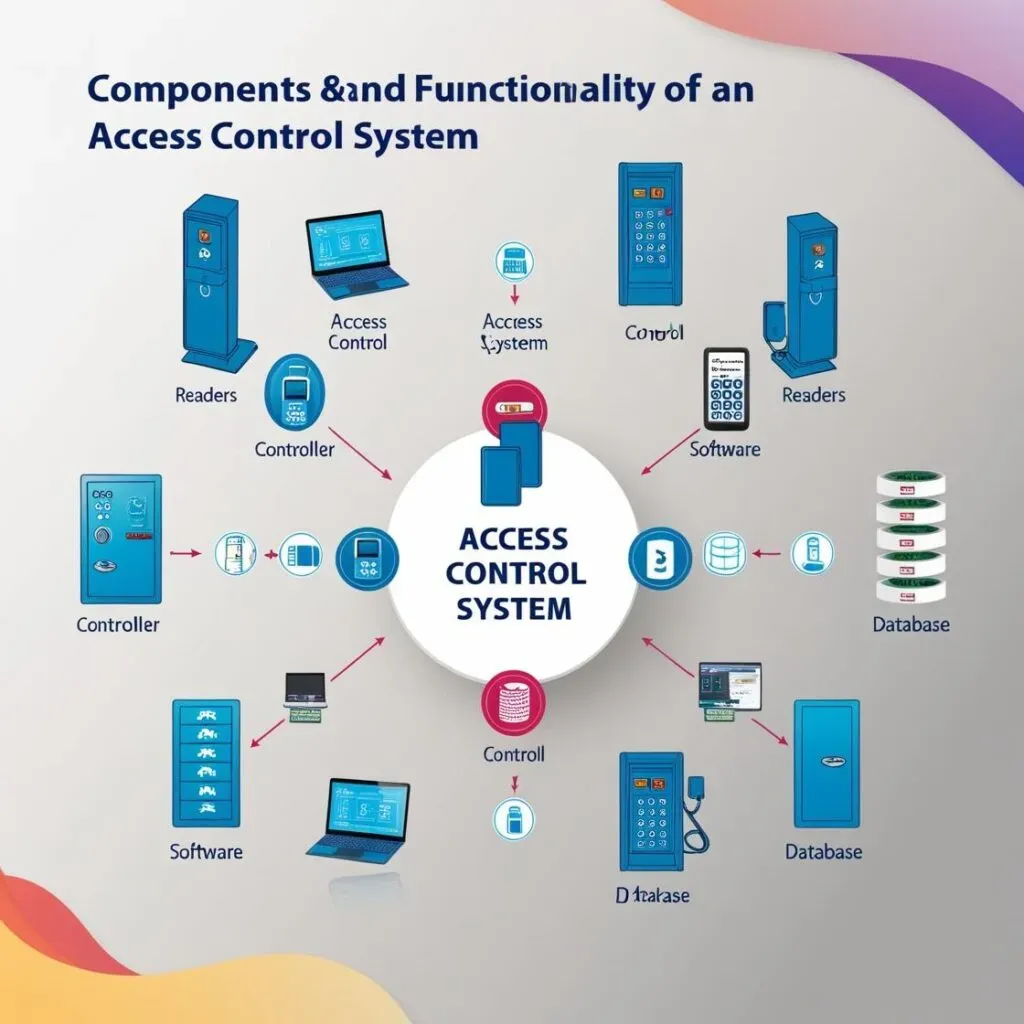
Access Control Systems are reshaping how organizations safeguard facilities, control who can enter, and when access is granted. Digital permissions reduce risk, simplify audits, and support scalable, everyday operations. From biometric access control to mobile credentials, these systems blend convenient entry with heightened security at doors and restricted zones. They offer a mix of on-site reliability and cloud-based access control, enabling centralized policy management across multiple sites. This introductory overview highlights seven core advantages and practical access control implementation tips to help plan, select, and optimize an enterprise security access control solution.
In other terms, these solutions can be described as facility identity and access management, focusing on verified individuals, assigned spaces, and time-based permissions. You might encounter descriptions like facility door security systems or permission-based entry controls that capture the same essential idea. From biometric security to cloud-based platforms and enterprise security access control strategies, the terminology shifts while the underlying goal remains protection and operational efficiency. Recognizing these terms helps IT and facilities teams compare options and design interoperable, future-proof systems.
Frequently Asked Questions
What are the access control systems advantages for security and regulatory compliance?
Key access control systems advantages include stronger security through least-privilege access, robust audit trails for audits, faster incident response, reduced risk from lost keys, and scalable policy enforcement across multiple sites. By digitizing permissions and eliminating shared credentials, organizations can demonstrate compliance and quickly detect access anomalies.
How does biometric access control fit into modern Access Control Systems?
Biometric access control uses unique traits (fingerprint, facial recognition, etc.) to verify identity, reducing credential fatigue and the risk of forged or shared cards. When integrated into Access Control Systems, biometric authentication enhances security while maintaining user convenience, subject to appropriate data privacy and retention policies.
What is cloud-based access control, and why is it advantageous for scalable Access Control Systems?
Cloud-based access control centralizes management, enabling easy provisioning, policy updates, and remote administration across sites. For Access Control Systems, cloud options support scalability, simplified maintenance, and faster deployments, while you should plan for data privacy, latency, and integration with existing CCTV and HR systems.
How can enterprise security access control be implemented to enforce role-based access and policy controls?
Enterprise security access control uses RBAC to assign permissions by roles, locations, and times. Implement with policy templates, time-based rules, and regular reviews to ensure users have only the access they need. Integrate with HR and building systems to automate provisioning and strengthen overall security posture.
What are practical access control implementation tips to ensure a smooth deployment of Access Control Systems?
Implementation tips include defining goals and requirements, choosing the right deployment model (on-premises vs cloud), planning integration with HR and CCTV, phasing rollout, and testing policies before full deployment. Also address privacy, data retention, and staff training to maximize adoption.
How do remote management and TCO considerations influence the choice between cloud-based and on-premises Access Control Systems?
Remote management capabilities let admins update access, monitor door status, and perform maintenance without on-site visits, reducing downtime. Consider total cost of ownership (TCO) when comparing cloud-based versus on-premises options: cloud can offer predictable subscriptions and lighter upkeep, while on-premises may deliver lower ongoing costs but require more maintenance and capital expenditure.
| Key Point | Summary | Notes / Impact |
|---|---|---|
| Enhanced Security and Compliance | Digitizes door permissions, enforces least-privilege access, and maintains precise access records for audits; reduces insider threats and helps with regulatory compliance. Records entry/exit events, credential status changes, and real-time alerts. | Real-time alerts; audit readiness; supports regulatory compliance in stringent environments. |
| Improved Audit Trails and Visibility | Comprehensive, timestamped credential usage and door events; easy review of permissions. When integrated with video or a central security platform, events can be correlated for stronger security posture. | Facilitates investigations, audits, and security improvements through integrated analytics. |
| Convenience, Efficiency, and Productivity | Electronic credentials (smart cards, mobile, biometrics) streamline entry, reduce wait times, and minimize keys; lowers admin overhead and improves user experience. | tangible productivity gains from fewer bottlenecks and reduced key management tasks. |
| Customizable Access Policies and RBAC | Policies defined by role, location, times, and security levels; RBAC ensures users have the necessary permissions only. Supports time-restricted access and rapid permission updates. | Improved security alignment with real-world workflows and easier ongoing administration. |
| Scalability and Flexibility with Cloud-Based Options | Cloud-based solutions enable scalability, centralized management, and easier provisioning across sites; beneficial for multi-site organizations. Consider data privacy, latency, and integration needs. | Simplified management and rapid expansion, with attention to privacy and integration considerations. |
| Remote Management, Monitoring, and Turnkey Maintenance | Administrators can add/revoke access, update schedules, and respond to alarms remotely; reduces on-site workload. Includes health checks, firmware updates, and alerting for ongoing device health. | Faster incident response and lower downtime with proactive maintenance. |
| Cost Savings Over Time and Total Cost of Ownership (TCO) Benefits | Long-term savings from reduced key management, fewer breaches, and lower incident response costs. Cloud pricing can be subscription-based; on-premises solutions offer long-term control over hardware and data. | Savings accumulate over time, improving overall return on investment. |
| Implementation Tips (Key Steps) | Summary of practical steps for deployment. |
|
Summary
Conclusion: Access Control Systems provide more than just a security barrier; they are a strategic tool for safer, smarter, and more efficient operations across organizations of all sizes. By enabling enhanced security, robust audit trails, user convenience, and scalable management—whether through traditional on-premises infrastructure or cloud-based solutions—these systems support current security demands and future growth. With careful planning, clear goals, environment assessment, and a vendor that prioritizes privacy, security, and integration, your organization can achieve better control, improved visibility, and a safer workplace built on a resilient Access Control Systems framework.