
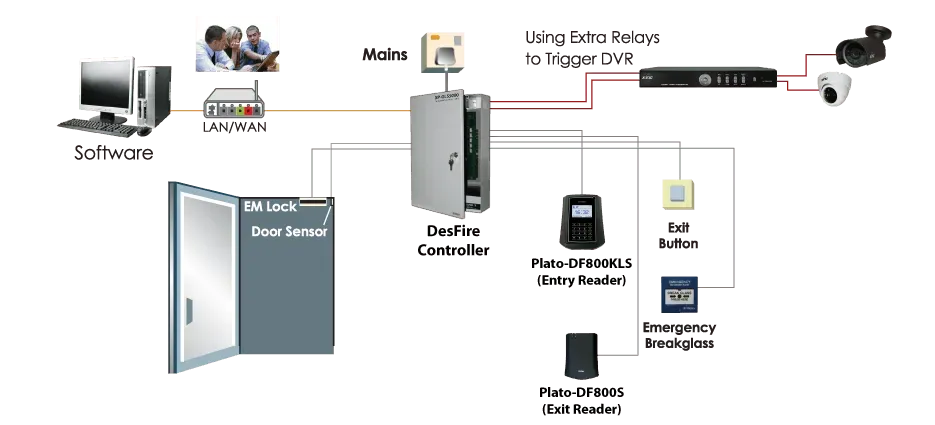
Access control systems guide is designed to help security teams navigate the complexities of protecting people, data, and assets in modern facilities for IT teams, facilities managers, and executives alike. In today’s security-conscious environments, relying on traditional locks and keys is no longer sufficient; an effective system can specify who may enter which spaces, when, and under what conditions, and can adapt to changing risks and regulatory requirements, while the guide also highlights how organizations can align security with business goals, user experience, and cost considerations for long-term value. This guide walks you through planning, installation, and ongoing management so you can choose the right solution, implement it correctly, and operate it securely to support safer facilities and smoother daily operations, including practical considerations like access control systems installation and post-deployment optimization. It emphasizes how credentials, readers, controllers, and software work together, while addressing governance, processes, training, audits, and continuous improvement to maintain a robust security posture, including role-based access policies, regular testing, and incident response planning. By applying these insights, organizations can achieve stronger security, better compliance, and more efficient operations while supporting scalable growth and resilient operations across multiple sites, a framework that scales from single facilities to campus networks.
Building on the opening, this section introduces the topic using alternative terms such as identity-based access control, entry management, and credential-based security to describe who can enter and under what conditions. You’ll see references to policy-driven authorization, smart credentials, biometric options, and mobile access as evolving means to authenticate and grant permission. LSI-friendly concepts like role assignment, attribute-based rules, and contextual access help map the landscape to work environments, IT systems, and physical facilities. Together, these terms frame a broader view of securing entry points without relying on traditional keys alone. The goal is to illustrate how different flavors of access control converge to deliver flexible, compliant, and resilient protection across spaces.
Access control systems guide: planning for secure facilities
In the realm of modern security, a comprehensive access control systems guide helps organizations lay a solid foundation for protection. Planning is about more than choosing hardware; it’s about aligning security objectives with business needs, risk tolerance, and regulatory expectations. By framing goals early, you streamline decisions during access control systems installation and set clear metrics for success.
During planning, explore how different access control models fit your environment and stakeholder requirements. Consider preferences for RBAC with ABAC elements, integration with HR and CCTV, and the potential for scalable growth. A thoughtful plan reduces future rework and supports smoother ongoing management as facilities expand and roles evolve.
Understanding the types of access control systems and selecting the right model
Choosing among the types of access control systems begins with a risk assessment and a clear understanding of policy implications. DAC, MAC, RBAC, and ABAC each offer distinct levels of control, auditability, and complexity. Evaluating these options in the context of your facility’s size, sensitivity, and compliance needs helps identify a practical, sustainable path.
Electronic credentials, biometrics, and mobile access are common components across many system types. When selecting a model, balance usability with security and ensure the approach can scale with user populations, shifts, and changing locations. A grounded view of how different models operate supports more predictable installation and smoother long-term management.
Installation best practices: from site survey to go-live
A successful installation starts with a detailed site survey, mapping doors, readers, controllers, and the network topology. This phase informs hardware and software choices and helps shape PoE power needs, redundancy plans, and integration points with existing security infrastructure. Framing the project around a concrete assessment of required credentials and access windows drives a cleaner implementation.
As you move toward go-live, implement standardized configuration, rigorous testing, and comprehensive documentation. Validate enrollment processes, door timing, fail-safe defaults, and emergency egress procedures. A well-documented installation not only improves initial performance but also shortens future maintenance efforts and supports ongoing optimization.
Managing access control systems: ongoing administration and lifecycle management
After deployment, ongoing administration becomes the backbone of security. Regular user provisioning and de-provisioning, permission reviews, and credential lifecycle management keep access aligned with roles and employment status. Effective management leverages centralized software to streamline tasks, enforce least privilege, and simplify audits.
Event logging, alerts, and periodic maintenance are essential for visibility and resilience. By planning for scalability—adding doors, facilities, or user populations—organizations can maintain performance without compromising security. Managing access control systems in a proactive, structured way yields smoother operations and stronger defense against insider and outsider threats.
Benefits of access control systems: security, compliance, and efficiency
A well-implemented solution delivers tangible benefits of access control systems, including reduced risk of unauthorized entry and easier regulatory compliance. Detailed audit trails support investigations and governance, while centralized monitoring improves situational awareness across facilities.
Beyond protection, these systems enhance operational efficiency through automated provisioning, remote management, and real-time visibility. Modern credentials and mobile access reduce friction for authorized personnel while preserving strong security controls, ultimately contributing to safer, more productive environments.
Security best practices for access control and common pitfalls to avoid
To maximize resilience, apply access control security best practices such as least privilege, multi-factor authentication, and thoughtful segmentation of zones. Encrypt communications between readers, controllers, and software platforms, and adopt routine log reviews with automated alerts to detect anomalies.
Even with a solid design, common pitfalls can undermine security. Avoid overcomplication by starting with a scalable core, standardize credential types, and maintain a regular maintenance cadence for firmware and batteries. Invest in ongoing training and clear incident response plans to ensure preparedness and predictable recovery when issues arise.
Frequently Asked Questions
What is the role of the Access control systems guide in planning and installing access control systems?
The Access control systems guide informs planning and installation by defining objectives, conducting a site survey, selecting appropriate hardware and software, planning network and power (including redundancy), designing a RBAC/ABAC-based permission strategy, and outlining integration, testing, documentation, training, and go-live optimization for a secure, scalable deployment.
What are the types of access control systems described in the Access control systems guide?
The guide covers DAC, MAC, RBAC, ABAC, electronic/smart card systems, and biometric/mobile credentials. It notes that RBAC with ABAC elements often offers a practical balance for mid-size organizations, with the choice driven by risk tolerance, compliance needs, and user convenience.
How does the installation process in the Access control systems guide ensure reliability and security?
The guide recommends a structured installation: define scope, conduct a site survey, choose compatible hardware/software, plan network and power, design a solid permission model, plan integrations, perform testing and commissioning, and complete documentation and training, followed by go-live optimization and ongoing firmware updates and backup strategies.
What ongoing management practices does the Access control systems guide recommend for managing access control systems?
Ongoing management should automate user provisioning and de-provisioning, enforce least privilege, maintain event logs and audits, manage credential lifecycles, conduct incident drills, perform regular maintenance and software updates, and plan for scalability as the organization grows.
What are the key benefits of an effective access control system highlighted in the Access control systems guide?
Benefits include enhanced security by limiting access to sensitive areas, improved regulatory compliance through auditable trails, operational efficiency via automated provisioning and centralized monitoring, real-time visibility and auditability, and greater user convenience with modern credentials.
What security best practices does the Access control systems guide suggest for access control systems?
Best practices include enforcing least privilege, implementing multi-factor authentication, segmenting access zones, encrypting data in transit, regularly reviewing logs, planning for redundancy, establishing incident response procedures, and providing ongoing training and clear documentation.
| Aspect | Key Points |
|---|---|
| Introduction |
|
| Understanding Basics |
|
| Key Components |
|
| Types of Systems |
For most mid-size organizations, RBAC combined with ABAC elements provides a practical balance of security and manageability. The choice depends on risk tolerance, compliance requirements, and user convenience. |
| Installation: Planning and Implementation Steps |
|
| Ongoing Management |
|
| Benefits of an Effective Access Control System |
|
| Security Best Practices |
|
| Common Pitfalls and How to Avoid Them |
|
| Putting It All Together |
|
Summary
Access control systems guide provides a comprehensive overview of how modern access control protects people, data, and assets by managing who can enter spaces when and under what conditions. This descriptive summary highlights planning, installation, ongoing management, and optimization to deliver stronger security, regulatory compliance, and smoother operations. By tailoring the approach to risk, regulations, and user needs, organizations can implement solutions that scale with growth and stay vigilant through disciplined governance and continuous improvement.